
How Forth Rivers Trust made fuel-saving driving into a contest
“It was a team building exercise. People were saying: OK, so what's next?” Michiel Voermans
You don’t need to know everything to get started.
It’s a simple piece of advice. But many organisations hold off taking action to reduce their carbon emissions because of worries about not having ‘enough’ or the ‘right’ information.
So, we sat down with the team at Forth Rivers Trust, who attended Climate Springboard in November 2024. Their experience shows what you can achieve with relatively little data – but plenty of enthusiasm.
The Edinburgh-based charity, with a team of 21 staff, works to protect and restore the rivers which flow into the Firth of Forth and Forth Estuary. This includes hands-on river restoration, plus education and research.
Deputy director Jacquelyn Johnson and GIS and data officer Michiel Voermans sit on the trust’s net zero committee, created in 2024.
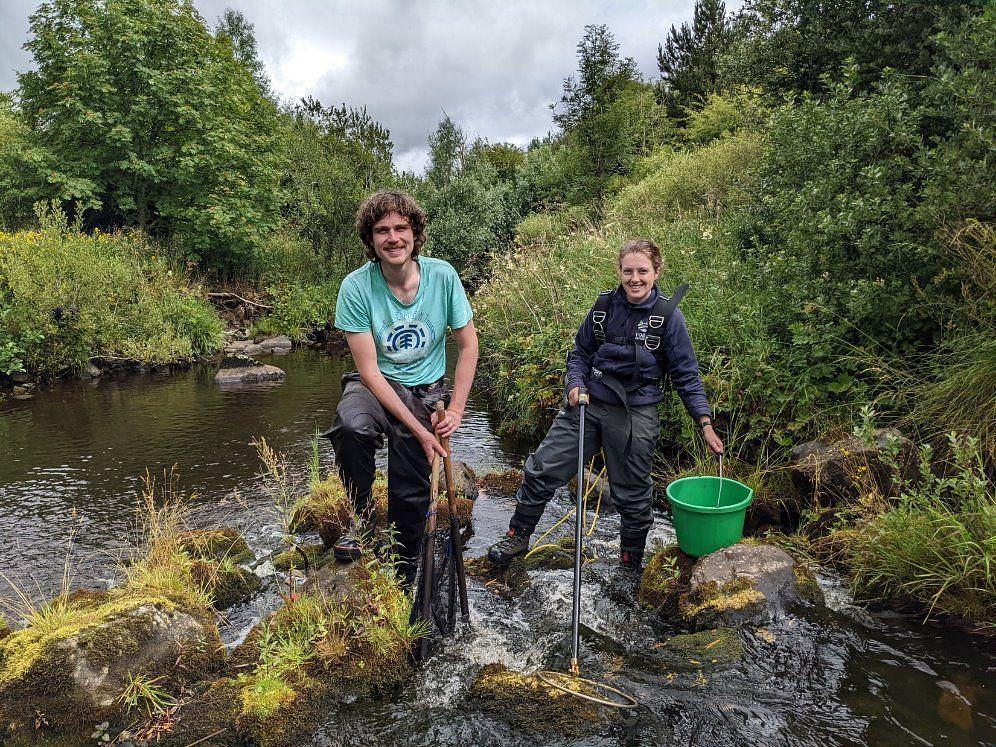
Pictured: Michiel Voermans and Amy Fergusson, head of science and monitoring
Good guesswork
Their first act was to begin an audit of their annual carbon emissions, a ‘baseline’ to measure progress against in future. But without existing data collection processes in place, they knew it would take 12 months before they would get a detailed picture.
However, a rough estimate of their carbon footprint (made in a few minutes using Small99’s free tool) indicated that emissions from driving their fleet of 3 vehicles to sites across the Forth catchment are significant – and therefore a good place to start.
“We've got diesel pool cars and they're ageing. We know at some point we'll have to replace them. There will be a discussion about whether we could afford to go electric at that point,” explains Jacquelyn.
So, while data collection continues in the background, they chose to focus on simply burning less diesel in the first place.
Points and prizes
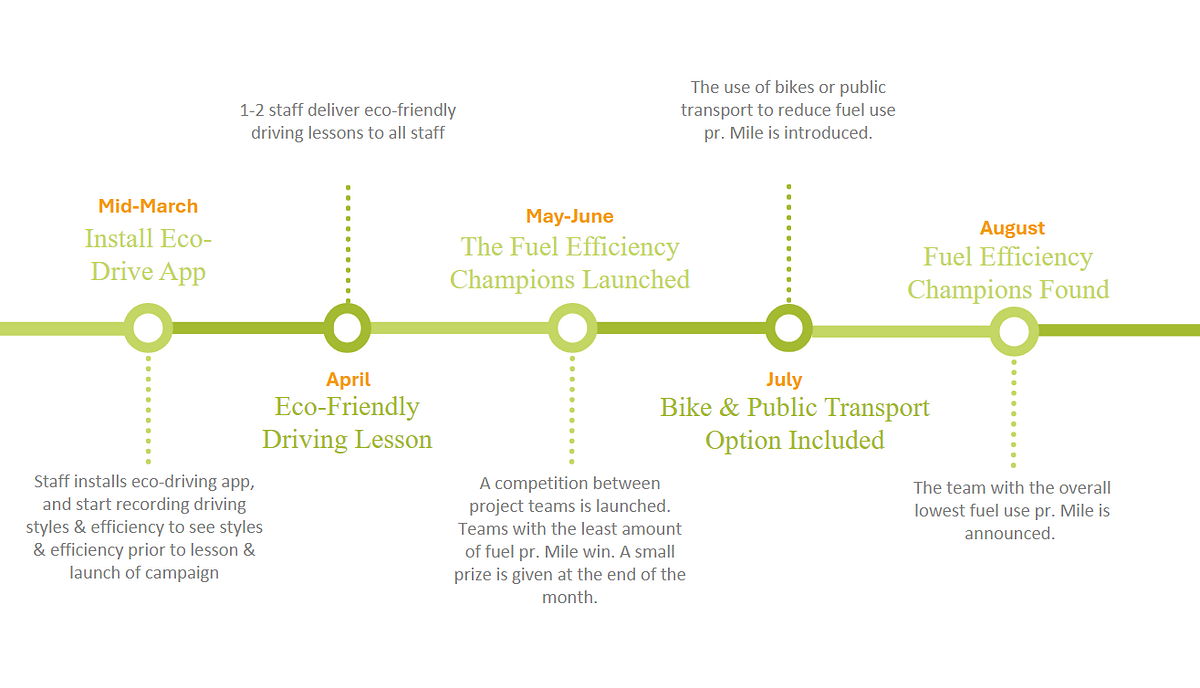
Over summer 2025, Forth Rivers Trust ran an internal fuel reduction campaign.
To start, all staff were given a lesson in fuel-efficient driving techniques by a member of the net zero committee. It was important to “make it feel positive,” explains Michiel, so they introduced an element of competition.
Employees were split into project teams. Drivers were asked to record the average fuel consumption (miles per gallon) at the end of each journey, as displayed on the dashboard. A “cheat sheet” displaying tips for fuel-efficient driving was put in each vehicle as a reminder.
Michiel compared the figures with the average fuel consumption for each vehicle, according to website Honest John, to create a running score for each team. Taking public transport, cycling or carsharing scored bonus points.
At the end of the month, the team with the lowest rate of fuel consumption per mile travelled won a £50 gift voucher.
The campaign encouraged staff to reflect on their driving habits and assumptions. “A lot of people realised they didn’t have to be in such a hurry on the motorway,” says Jacquelyn. “Driving at 60mph, you arrive at pretty much the same time [as at 70 mph].”
Momentum
Another benefit is that, by involving the whole team, it created momentum and buy-in for other net zero actions.
“Everyone was super engaged,” says Michiel. “It was a team building exercise. People were saying: OK, so what's next?”
“We want to do a commuting campaign at some point, but we'll have to think about it carefully to be inclusive and fair to everyone. Same with a waste campaign, we're probably going to launch later this year.”
Whatever comes next, Michiel and Jacquelyn agreed that working toward net zero as a team is easier than going alone: “I just don't know how you would get anything achieved. And it would be quite lonely. Whereas we're a group, we can brainstorm and keep each other company.”
Top tips:
- Start with something. Even if it's small, it will give you some momentum so that you stay motivated as a team.
- Get a rough estimate of your CO2 footprint, if you don't yet have data to calculate it accurately. It was enough for us to get started.